

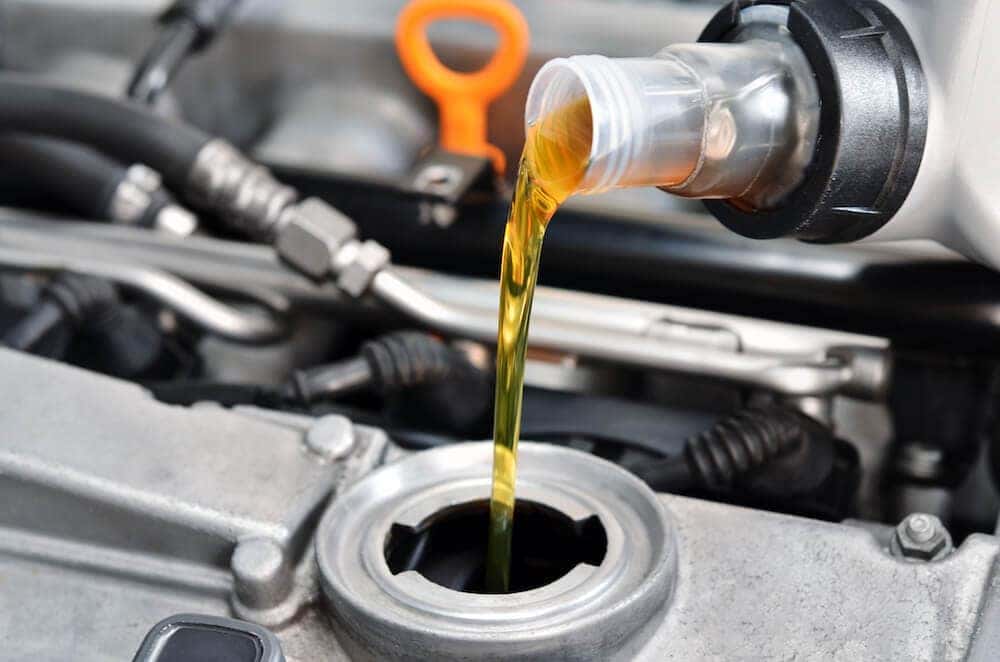
Oil changes are one of the many responsibilities that come with car ownership, but they’re vital to help keep your car’s engine in good shape and lasting as long as possible.
In addition, for newer cars, not changing your oil on time or according to the manufacturer’s recommendations could void your car’s warranty.
What is the engine oil change interval?
Engine oil needs to be changed regularly after a certain number of kilometres are driven (mileage) or time has passed. The oil change interval is simply the time between oil changes and usually determined by the vehicle’s manufacturer.
For example the recommended service and oil change interval for the Skoda Superb is every 15,000km / 12 months.
However for the more advanced, optimum engine oil change intervals can vary, depending on various factors such as engine type (diesel or petrol), the engine mileage, overall engine condition, choice of oil (synthetic or mineral), quality of fuel etc.
Why are oil changes important?
Engine oil is an essential component of your car’s engine. An oil change is vital to the optimal performance of your vehicle because changing the correct oil and in accordance with manufacturer recommended intervals directly affects the longevity of the engine by providing:
- Lubrication for all important components, reducing friction and engine temperature, noise and wear
- Corrosion protection
- Engine cooling
- Proper sealing and clearance between materials
- Protection from deposits of by-product resulting from combustion
Despite the excellent lubricating properties of engine oil, friction will still occur, and this introduces microscopic particles into the oil which. This, together with the chemical breakdown of the oil and the slow buildup of other contaminants such as carbon particles from combustion and water from condensation, will cause a sticky build-up that eventually restricts the moving components of the engine.
You can see this when you replace your oil – it resembles the colour of dark maple syrup, a result of the build-up of contaminants in your engine over time.
What is the recommended oil change interval for my car?
Recommended oil change and service intervals may vary between different manufacturers and even car types, but this information can usually be found in the maintenance section of your owner’s manual. Some manufacturers may list two service schedules, based on “normal” and “severe” driving conditions. Read the descriptions carefully to see which schedule reflects how you drive and that would be the one you should follow.
If for some reason it’s not in the manual or you’re still unclear when your next manufacturer recommended oil change should be, contact your local dealer, they should be able to help.
However, many new cars (such as the Skoda Superb) now come equipped with oil-life monitoring systems that automatically determine when an oil change or service is needed and notify you with an alert on the instrument panel.
Some systems work more simply, usually based on time and mileage. More advanced designs analyse information from sensors throughout the vehicle and then use a complex algorithm to predict the quality and life of your oil. This means that your oil change intervals will be based on your actual individual driving conditions and habits.
In any case, the great thing about having a car with an oil-life monitoring system is that it takes the guesswork and hassle out of remembering when your next service is due. Just drive as you normally would until the maintenance light comes on.
Don’t delay
So we can see why the engine oil change interval is critical, because over time engine oil loses its protective properties for the engine and important moving components. Having your oil changed at the manufacturer recommended intervals as part of your overall vehicle maintenance will keep your car running smoothly, prolong its life, and help you avoid major expenses in the long run.
